


The best custom range hood is not simply the one with the highest airflow rating or the most decorative options. Its capture area, duct path, blower or liner, mounting position, and proportions are planned around the cooktop before the finish is finalized. Start with layout and ventilation, lock the working dimensions, and then choose material, silhouette, and details. If priorities conflict, safe installation and ventilation requirements should lead.
Start With the Kitchen, Not the Finish
A custom hood is one part of a larger system. Before comparing copper colors or decorative straps, document five connected decisions:
- Kitchen and appliance: Record the cooktop model, width, depth, fuel type, mounting position, ceiling condition, nearby cabinets, and obstructions. These establish the physical envelope.
- Capture area: Coordinate hood width, depth, mounting height, and the liner opening so the working area is not reduced to a decorative shell.
- Ventilation: Identify the blower or liner, duct diameter, route, turns, termination, and any makeup-air coordination before the exterior design is approved.
- Exterior design: Select material, finish, texture, silhouette, crown, apron, straps, and rivets only after the functional boundaries are understood.
- Final approval: Confirm field measurements, the approved drawing, trade responsibilities, and installation documents before cabinetry, stone, ductwork, and appliances are locked in.
Mounting type changes performance and appearance. A wall helps contain the cooking plume, while an island hood lacks that rear boundary and is more exposed to cross-drafts. Under-cabinet installations introduce cabinet and enclosure constraints. Browse the Elite Range Hood range hood collection for visual families, then use the Elite Range Hood configuration guide to review current mounting, ventilation, finish, and detail options.
Size the Hood as a Capture Zone
The metal shell must look balanced, but its first job is to support an effective capture area. Width is only one variable. Depth, mounting height, liner opening, and burner position all affect whether heat, moisture, grease, and particles reach the hood.
Use Elite Range Hood's custom range hood measurement guide to organize field measurements, but do not treat a general clearance number as universal. Requirements may come from the cooking-appliance instructions, liner or hood manual, and locally adopted code. Confirm them before cabinetry, stone, or duct rough-ins become difficult to change.

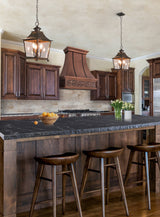
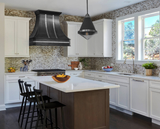
A completed Elite Range Hood project shows how hood width, adjacent cabinets, ceiling height, and visual mass relate in a finished room; it does not prescribe dimensions.
For a useful first review, record four dimensions together:
- Cooking-surface width and depth: Establish what the hood must cover.
- Planned mounting height: Verify it against the applicable appliance and ventilation instructions.
- Available hood height: Subtract the confirmed cooking-surface height and clearance from the finished ceiling condition.
- Adjacent architecture: Check doors, cabinet crowns, open shelves, windows, beams, and pot fillers for conflicts.
A hood that is visually impressive but too shallow, poorly positioned, or incompatible with its liner is not a successful custom design.
Choose Ventilation Before Decorative Details
When an exterior route is feasible, a ducted system removes captured cooking air from the home. The U.S. EPA recommends using a range hood while cooking and, when possible, venting it outdoors. A recirculating system filters and returns air to the room, so verify filter requirements and expected performance for the exact equipment.
The largest CFM number is not automatically best. Selection depends on the cooking appliance, hood geometry, height, duct resistance, noise goals, and house pressure. Compare independently tested airflow and sound data, such as the HVI-Certified Products Directory, and verify liner-to-shell compatibility.
The duct is part of the appliance system. Follow the manufacturer's required material and diameter. Broan-NuTone explains that reducing the specified size restricts performance and recommends smooth metal rather than ridged flexible duct. Review the manufacturer's ducting guidance with the installer.
High-airflow exhaust can affect building pressure. The 2024 International Residential Code includes a makeup-air provision for certain systems over 400 CFM when specified fuel-burning appliances are inside the dwelling's air barrier. Because local adoption and project conditions vary, treat IRC Section M1503.6 as a coordination trigger. Ask the local authority and a qualified HVAC professional what applies.
Select Material and Finish for the Way You Live
Material changes the hood's visual temperature; finish and texture shape its appearance and maintenance. Elite Range Hood currently offers copper, stainless steel, brass, and zinc collections.
- Copper brings warmth and strong color variation. Ask whether the selected finish is sealed, how its appearance may change, and which care method applies.
- Stainless steel gives a cooler, more neutral expression that can connect visually with appliances. Compare brushed, polished, painted, and other approved finishes in the actual room light.
- Brass creates a warmer gold-toned focal point. Its visual intensity changes significantly between bright, brushed, and aged-looking finishes. The ELITE Chicago EL1-B01 offers a current minimalist brass reference.
- Zinc offers a quieter gray tone that can bridge cool metal, painted cabinetry, and stone without the brightness of polished stainless steel.
Digital images cannot fully represent reflectivity, texture, or color variation. Review physical Elite Range Hood finish samples beside other kitchen materials in daylight and evening light. Confirm cleaning instructions for the exact finish rather than applying a generic metal-care recipe.
Make the Silhouette Part of the Architecture
Choose shape after defining the functional envelope. A box form, such as the ELITE Retro EL5-B03, reinforces straight cabinetry. A tapered hood reduces visual mass as it rises. Curved or bell-shaped forms, such as the ELITE Houston EL7-B02, add softness, while an arch can repeat doorways, niches, or cabinet profiles. The right form creates a deliberate relationship with the room.

A completed Elite Range Hood project shows a handcrafted patterned copper hood as part of the room architecture, with its chimney terminating directly at the finished wood ceiling.
Decorative elements should clarify the design. Straps divide a large surface and reinforce vertical rhythm; rivets add scale and texture; an apron, crown, or pot rail changes visual weight. Read how straps and rivets affect a hood's character when those details enter the brief.
Turn the Design Into an Order-Ready Specification
Before placing a custom order, assemble one coordinated packet rather than sending isolated preferences. It should include:
- the cooking-appliance model and installation document;
- field-verified cooktop, ceiling, wall, cabinet, and obstruction dimensions;
- the selected mounting type and intended finished mounting height;
- the liner or blower model, duct diameter, route, turns, and termination location;
- confirmation of any makeup-air, electrical, and structural requirements;
- the approved hood width, depth, overall height, and liner opening;
- material, finish, texture, silhouette, crown, apron, straps, rivets, and other chosen details; and
- clear responsibility for field verification, rough-in, installation, commissioning, and code approval.
Elite Range Hood's custom ordering overview explains the current drawing-approval sequence. Before checkout, ask the team through the Elite Range Hood contact page to review dimensions, finish, and equipment compatibility. The strongest decision resolves ventilation, proportion, material, and installation as one system.
Sources and Technical References
- U.S. EPA: Sources of Indoor Particulate Matter — Cooking
- International Code Council: 2024 IRC Chapter 15, including M1503.6
- Broan-NuTone: Range Hood FAQs and ducting guidance
- Home Ventilating Institute: HVI-Certified Products Directory
Frequently Asked Questions
Should a custom range hood be wider than the cooktop?
It should provide the coverage required by the system and installation. Extra width may help in some wall or island applications, but cannot replace adequate depth, a compatible liner, correct height, and proper duct design. Confirm final dimensions with the equipment instructions.
How many CFM does my range hood need?
There is no universal CFM number. Cooking equipment, hood geometry, location, duct resistance, height, noise goals, and house pressure matter. Size the liner or blower as part of the complete ventilation system.
Is a ducted hood always better than a ductless hood?
An outdoor-vented hood can remove captured air from the home, while a ductless system filters and recirculates it. Exterior venting is generally the stronger choice when it is feasible and permitted, but the correct solution depends on the building, equipment, and local requirements.
Which metal is best for a custom range hood?
Choose according to the room's palette, desired visual contrast, approved finish behavior, and maintenance expectations. Copper and brass add warmth, stainless steel reads cooler and more neutral, and zinc offers a muted gray presence. Review physical samples before approving the finish.
What should I send Elite Range Hood before requesting a custom design?
Send the cooking-appliance model, room and cabinet dimensions, ceiling information, photos or drawings, preferred mount, proposed liner or blower, duct information, material and finish preferences, and any architectural obstacles. Field measurements and final installation requirements should still be confirmed by the appropriate project professionals.